Showing posts with label op-ed. Show all posts

Tuesday, September 21, 2021

The Ryder Cup: Passion and Camaraderie Personified

The Ryder Cup: Passion and Camaraderie Personified
 
 
Every two years, the golfing world comes together for something truly special: The Ryder Cup

Considered one of the most, if not the most, prestigious event in golf, The Ryder Cup remains golf's flagship event that transcends tours, an event so grand it can only be played every two years. To be apart of it, in any way, is career defining.
 
As we head into another edition of the Ryder Cup this week, we take a look at what makes this event so special and revered by the golfing world.


WHAT IS THE RYDER CUP?
For those who do not know, the Ryder Cup is team golf at its finest, the ultimate battle between US and European golfers. 
 
Prior to the event, a captain is chosen for both the US and European teams, typically a previous Ryder Cup member, by former Ryder Cup captains. The 12-player team rosters are then partially filled by player performance, the exact criteria varying between the two teams. After this, to fill up the remaining roster spots, captains make special picks for players they want on their team who did not meet the qualifying criteria. Vice captains are also picked by captains, whose role is to aid the captain in decision-making and partner pairing throughout the event.
 
The Ryder Cup is played over a three day period and is a match play event. It features three golfing formats: foursomes, where teammates alternate shots between them, fourballs, where the best score is taken between teammates and singles, where players are matched up one-to-one. 
 
The goal  is the same across all formats: win the match and you win a point for your team, half the match and you receive half a point for your team. The team with the most points at the end of all the matches wins.


UNITY IN A SPORT OF SOLIDARITY 
Professional golf is an individual sport, where success is determined by one's skill and ability to overcome obstacles, both physically and mentally. 
 
The Ryder Cup takes this to another level. Not only must a player deal with their own internal pressure to succeed, they must succeed with the weight of their team and country/continent on their shoulders.

This is where the team aspect comes into play. The stakes are so high, the challenges so tough. Having a solid team, one filled with positive chemistry and genuine camaraderie is crucial to winning; teammates are all in it together and must succeed together, both on and off the course. A strong support system and genuine belief in one another builds confidence, and with that, golfing ability. It's this camaraderie that blossoms between teammates that, in part, makes the Ryder Cup so fun to watch. Whether it was Ballesteros/Olazabal, Fleetwood/Molinari or Spieth/Reed, fans love to see partnerships develop and succeed.
 
With unity comes passion. It is passion that leads to a desire to win, a desire to succeed for your team. The posterboy for Ryder Cup passion as of recently is Ian Poulter, who for some inexplicable reason always seems to play well during Ryder Cups, regardless of what kind of season he had prior. Passion is present not only in the players, but the fans as well. In a sport that typically features a more subdued fanbase (although this is changing as of late), the Ryder Cup is an opportunity for fans to show their passion in a way not possible during typical tour events. It's akin to a NBA or NHL fanbase during the playoffs, players will get cheers from their fans and boos from their opponent's fans. This is why the 2020 Ryder Cup was postponed to 2021, organizers knew that the tournament would not be the same without the devout fanbase that follows the Ryder Cup.

To create unity in a Ryder Cup team is difficult. The aforementioned camaraderie and passion is something that cannot be studied or forced; it needs to develop naturally. Egos must be suppressed and players must realize that it takes a team to succeed. This is where the Europeans, in my opinion, have excelled over the Americans. The ability for European captains of the past to put together teams that just work is remarkable. It takes a special player to be able to handle the pressures of a Ryder Cup and captains must be able to spot this. This is the reason why some of the best professional golfers do not perform well in the Ryder Cup, it's difficult for them to adjust to the pressure.

 
WHY DO WE WATCH?
While we may all watch the Ryder Cup for different reasons, there is something that unifies us all. I believe that we as fans watch the Ryder Cup to witness history being written, live in front of our eyes. We watch to see teams grow and succeed and watch to see the truly amazing golf that is spawned as a result of this. Anything can happen in the Ryder Cup, at any time. Momentum can swing, players can dominate, the recipe is perfect for us fans.
 
When someone asks me what is so special about the Ryder Cup, I ask them to look at the 2012 Ryder Cup. The Miracle at Medinah, as it was known afterwards, was the first Ryder Cup played after the death of European Ryder Cup legend Seve Ballesteros. The Europeans were down 6-10 heading into the Sunday singles, but against all odds came back, winning 9 of the 12 singles matches and halving one to finish with a score of 14.5 to 13.5. It was a display of golf unlike anything I have ever seen. The raw passion the Europeans had was on full display; they're were winning it for Seve, not for themselves.You can't write storylines like that.

So as another edition of the Ryder Cup is played this week, I encourage all golfing fans to watch the event. I can guarantee it will be like no other golfing event or sporting event you've seen. Be sure to not only watch the golf shots, but the player's emotions, the passion and intensity in each shot, the fan's reactions and enthusiasm, and everything else going on in the background. 
 
 
It'll be easy then to see why this is the flagship event of professional golf,


-Nick
Toronto Golf Reviews


Monday, September 13, 2021

4 Things Golfers Can Learn From Patrick Cantlay's Playoff Run

What can we learn from Patrick Cantlay's incredible FedEx Cup Playoff Run?
 
 
During the 2021 FedEx Cup Playoffs, we watched Patrick Cantlay go on a superb golfing run, showcasing an incredible displaying of golfing skill under the toughest of circumstances. It started with his performance at the BMW Championship and then at the Tour Championship, resulting in him winning the FedEx Cup.

But what was most interesting was the way he won. First at the BMW, via an epic playoff between Bryson DeChambeau and himself, in which Cantlay did not falter at all and dominated with his putter. Then at the Tour Championship, where he overcame small bouts of trouble to win by one shot over Jon Rahm.

It has been a few weeks since Cantlay hoisted the FedEx Cup and we've all had time to reflect on it. I believe that there are a few things we can learn from Cantlay and what we saw him accomplish.
 
 
1) The Importance of Putting
Putting is what won Patrick Cantlay the FedEx Cup. Period.
 
It started at the BMW Championship, where he made a clutch putt after clutch putt all while going toe-to-toe against the long-hitting Bryson DeChambeau in an epic six-hole playoff. DeChambeau was able to outdo Cantlay off the tee, but once they were on the green, Cantlay dominated. It brought truth to the phrase "drive for show, putt for dough".

Learning the game today, I think there is a huge emphasis on gaining distance. Don't get me wrong, I think that's a good thing; everyone loves hitting a long drive and its a real confidence booster. But what Cantlay showed us is that an equal emphasis should be placed on putting. The ability to save par or two-putt a tricky green can have a huge effect on lowering your scores and making you a better golfer. 

To be fair, putting is probably the hardest thing to practice, because you actually need to be on a golf course to develop it fully (i.e. learn how to read greens, slopes, etc.). At a driving range though, you can practice chipping, driving, approach shots, etc., and I think we can all agree that its easier to get in some range time as opposed to a round of golf. There are numerous off-course putting aids out there, however, that can help you with your stroke or weighting and these are all great things. 

The bottom line is that its worth practicing putting and considering it on par to driving and shot-making, etc.


2) How To Play One Hole at a Time
Cantlay rarely made a mistake during both the BMW Championship and the Tour Championship. But when he did, he was able to recover from it and not make the situation worse. For instance, at the Tour Championship, he made 3 bogeys, but immediately followed two of those up with birdies on the next hole. His ability to completely disregard on hole from the next was quite remarkable.

The is something that I think takes quite a bit of work to accomplish, because it's not a physical skill, rather a mental one. Often times, when I finish a bad hole, my first instinct is to ponder on it and see how and where I went wrong. While this is a good thing, sometimes I dwell on certain things. I begin to question my golfing abilities and start letting this dictate what I should do on the next hole. 
 
Cantlay showed us that being able to separate one hole from the next mentally is extremely beneficial. It's like wiping the slate clean or hitting the reset button at the start of each hole. New hole, new opportunities to score low. 
 
On a similar note, we recently wrote an article about how not to compound errors on a golf course, in our "How to Play Smart Golf" series, that preaches the same message we heard from Cantlay.


3) Developing the Correct Mindset for Golf
In his post round interviews, Cantlay often mentioned that on the course, he tries to tune everything out and enter what he calls a trace-like mindset. This was on full display during the playoff at the BMW Championship, where Cantlay did not even realize that DeChambeau had hit his tee shot into the water, despite teeing off after him. 

Adapting this for the everyday golfer requires some adjustment. Normally us golfers aren't playing with crowds of people or TV cameras watching us, but the idea is similar: have a positive mindset and keep your focus on golf. The golf course should feel like a place where you can get away to, somewhere to escape the stresses and requirements of everyday life. 

It's also a great skill to develop if you do feel pressure on the golf course. For example, when paired at a golf course with a golfer who is better skilled than me, I often feel slightly pressured to perform well. Or when I'm about to hit a shot in front of the course marshal. Having the ability to completely tune out the sources creating the pressure is an immensely useful skill to have.


4) Play at Your Pace
There were many scenarios throughout the FedEx Cup Playoffs where Cantlay may have been tempted to speed up his shot process. For instance, when full of adrenaline after sinking one of his numerous clutch putts. Or when he was grouped with Bryson DeChambeau. But no matter the situation, Cantlay's speed never changed; he always assessed each shot the same way, always wiggled his feet when putting the same way, and always took time to make sure things were exactly the way he wanted them to be.

It's a matter of comfort in my opinion. Most players have a "routine" which they go through prior to taking a shot. This routine takes a certain amount of time and speeding up any of the steps in your routine can throw everything else off. 

Again, this is a skill that can always be developed. For newer golfers, your routine, on the whole, may take longer than others. There's nothing wrong with that, but you'll eventually notice that as you become more confident in the various aspects of your game, your overall routine will speed up. The key to remember is to just do what you do and not change it in either way, regardless of what your speed is. 
 
 
***
 
Patrick Cantlay's playoff run was exciting to watch, in terms of entertainment, but equally interesting in terms of what us everyday golfers can learn from it. This ability to learn and be entertained at the same time is something that I think we see very little off when watching professional golf. In the end, we all want to become better golfers.


What else do you think can be learned from Cantlay? What was your favorite Cantlay moment this year? Let us know in the comments below.


-Nick
Toronto Golf Reviews


Tuesday, August 10, 2021

First Time Going to a Golf Course? Here's What You Need To Know...

So you recently decided to take up golf and you're loving it so far. You've been to the range a few times, practicing hard at your new sport, and maybe even had a lesson or two from a local pro. But one thing is certain, you're hooked and you want to step it up one level. You want to try out a real golf course. First impressions are a huge thing, especially in the golfing world,  so here are a few tips that can make your first time at a golf course as rewarding as it can be.
 
 
First time heading out to a golf course? Check out these tips below (image: wallpaperswide.com)


1) Start out with an easy course 

This is probably the best tip I can give to newcomers. For your first time, it is wise to play a course that is both shorter in length and easy in difficulty. This was the mistake I made. The first course I played was pretty tough. In fact, it's still one of the more difficult courses I've played (for those curious, it was Mill Run Golf Club's Championship Course). I had gone with a few friends and while I had a great time with them socially, I did play pretty poorly. I was able to hit a few good shots here and there, but most of my shots were short tops, slices or overshots. And most of my time was spent searching for my ball in either the rough, hazards, or OB areas. Easier courses, in general, are usually more forgiving in terms of hazards and OB areas. Bad shots can usually be found and there's a lot less risk on each hole.

But you're a new golfer, so how exactly do you tell if a course is easy or tough. Well luckily, the various golfing associations around the world have thought of this and developed the "Slope and Course Rating" evaluation. In layman's terms, these are numbers that represent what a scratch (course rating) and bogey golfer (slope) would shoot at said course. It's a bit more detailed than that, but all you really need to know is, in most cases, the lower the numbers, the easier the course. You'll also find that depending on what tee box you play from, the slope and course ratings will change. This brings us to our next tip.


2) Don't play from the long tees! 

Most people will naively think that playing from the longer tees just makes the hole longer. While this is true in most cases, longer tee boxes can also introduce new features/hazards into a hole, or make them more pronounced. For example, a dogleg par 4 might introduce fairways bunkers when played from the longer tees, or make your second shot a lot tougher. Don't feel pressured to start from the longer tees, even if you can hit it far. The requirements equally for both accuracy and distance increase the farther back the tee boxes are. Often times, accuracy is the harder of the two to control. At most courses, the red or white tees are a great place to start. Golf is a tricky sport even for the best players, so there's no need to make it any harder than it has to be, especially for a newcomer learning the game.


3) Book a 9-hole twilight round

I've said this a few times before, most recently in my "Why Don't More People Golf" article, but I am a huge fan of the 9-hole twilight (after 5pm) round. From a time perspective, nine holes of golf will probably take a new golfer about 2-3 hours, a much more manageable and easier to work with time-slot, compared to a full round.

In terms of vibes, I've often found that the atmosphere at a golf course during the twilight time is much more relaxed, compared to earlier times. People seem to be more easy-going and less uptight. It's a great environment for a new golfer and its usually less busy. You can re-take a shot or play two balls without having others complaining. Plus the prices are usually cheaper, which always help. 


4) Don't feel intimidated

There's absolutely no need to feel intimidated playing a golf course. Every golfer at some point was a beginner. That being said, there's a few things you can do to feel less intimidated. For example, if the group behind you is playing quicker or putting pressure on you, feel free to let them through. Don't let them ruin your golfing experience and they'll almost always willingly go ahead when offered. If you're worried that you won't play well on the course, a quick bucket at the driving range before your round is an excellent way to get dialed in. 
 
Another thing newcomers might not realize is that a course is much different from a driving range. Your shots now have meaning and distance isn't everything. But this shouldn't intimidate you at all. Your shot routine will still be the same as on the driving range (something to note though, playing off plastic tee mats at a driving range is vastly different than playing on real grass at a course, as we wrote about years ago). On a course, what's changing now is your mindset before your short; you're thinking about club selection, wind, what to avoid, etc.


5) Alone vs with others 

For years now, I've been hearing mixed opinions about going at it along or with a group of golfers for your first time on a golf course. I can see both sides of the argument and to be fair, there are pros and cons to both. 

Let's start with going alone. You do have the benefit of not feeling like you are the worst in the group or that you are holding up your playing partners. It's just you and the course, similar to a driving range experience. But it does come at a price, some may feel intimidated to go at it alone and may get caught up with things like course expectations, rules and so on. Plus, unless you're going to a quieter course or at a less busy time, you will most likely be paired up with another person or two. 

Going with a group can be a positive experience. Like I said earlier, this was what my first time was like. In my case, my group of friends were okay golfers, but knew the ropes. They weren't competitive and just enjoyed being on the course. Even though my golf wasn't the best that day, it was fun to watch how my friends approached each hole and I felt that I learned a lot from them. They didn't just give me some generic swings tips, but showed me what your mindset should be like for different holes. For example, playing away from the hazards, how to set up an approach shot. I couldn't quite execute it all at the time, but I learned what to do.


6) Relax and have fun

Yes its a bit cliche, but sometimes it just has to be said. There's no need to be stressed or worried about anything. That's exactly the opposite of what golfing is supposed to be about. Sure, you'll hit bad shots, you'll lose a few balls, you might play slow, but that's all part of the experience. All golfers, regardless of skill level, still do this from time to time. But I can guarantee at some point during your round, you'll do something great, something that makes you want to keep coming back. So there's no need to stress out. Eventually, you'll find that the golf course can be a place to relax, catch up with your friends and even have some friendly battles between them.
 
 
***
 
 
So there you have it! Six basic tips for newcomers heading out to the course for the first time. I hope you learned something from this and, more importantly, that you enjoy yourself. The game of golf is truly a sport like no other and it's great to see that more and more people are getting into it.


If you have some tips that you would like to share with us, drop them in the comments below. Or feel free to share your first golf course experience with us!


-Nick
Toronto Golf Reviews

Tuesday, July 27, 2021

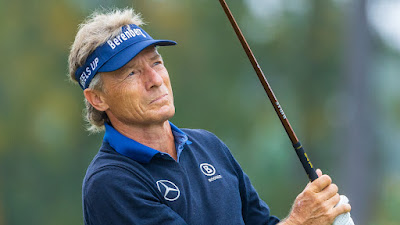
What New Golfers Can Learn From Watching Senior Tour Golf

What Can New Golfers Learn From Watching Senior Tour Golf? (image: NY Times)
 
This past week, the 2021 Senior Open was played at Sunningdale Old Course in England. I was lucky enough to catch the last round on TV, even through a hectic Olympics schedule. I don't typically watch Senior tour events, but I am glad I watched this one. It was a great display of golf, as Welshman Stephen Dodd, fought off attacks from the likes of golfing legends Miguel Angel Jimenez, Darren Clarke and Bernhard Langer, to win his first major. Even sweeter perhaps is that Dodd is now eligible for PGA Tour Champions events.
 

For those that do not know, the PGA Tour Champions and its European counterpart, the European Senior Tour, are senior professional tours featuring older golfers. Typically these are players that have found success on either the PGA Tour or European Tour, but want to continue their careers in a less-stressed fashion. There are fewer events on senior tours and the ones played are only three rounds in length, except for majors. 
 

As I watched the final round of the Senior Open, I started thinking a bit more about senior golf and the players in general. I realized that average golfers, especially those new to the game, can learn a great deal about golf by watching senior tour events, even more so than regular PGA Tour events, in my opinion. 
 
 
So what exactly do I think can be learned? Well, I think it can be boiled down to two things: how to approach the game mentally and learning through experience
 
 
1) How to approach the game mentally
Let's face it, most of us golfers do not have aspirations to play professional golf. We play because we enjoy the game and enjoy playing it with others. Now that isn't to say that we don't want to get better; we all do. We all want to hit that perfect iron shot or sink that clutch putt. One way players can improve their game is to examine how they approach it from a mental aspect. 


Here is where watching senior golf comes into play. From the events that I've seen, there is a more relaxed and calm atmosphere that seems to be present at these events. We see senior players having a good time while playing their rounds, talking to their playing partners, the fans, etc. It just feels more relaxed than when you compare it to a normal PGA Tour event. And it's for good reason. To be fair, most of the senior players have already had successful careers and may not necessarily have the same worries as a standard PGA tour player, such as trying to make a name for themselves or breaking through to win, etc.


This is the correct mindset us players should have towards the game, in my opinion. We shouldn't beat ourselves up over a bad shot, or let negative thoughts about a previous shot influence the next. I think any golfer, but new golfers in particular, can look to these senior players as an example of how to implement this correct mindset, in a tried and tested manner.


2) Learning through experience
The motto of the PGA Tour Champions is "Where Legends Play". This pretty much sums up the golfers that play on the senior tours. We're seeing experienced veterans, giants of the game, playing these events, outright legends in some cases. These are golfers who have been a part of professional golf for a long time and know how to play the game the right way. It's analogous to a master artisan, who has perfected their craft over time.

And who better to learn from than the masters themselves. What average players can learn from these veterans are things like shot-selection, game-plans for hole shapes/styles, how to recover when you find trouble, and overall golfing knowledge. Sure, the players are older, their swings are more restricted and they don't bomb it like the regular tour pros. But the vast wealth of knowledge that they possess is invaluable to learn from. Imagine being able to pick the mind of some of golf's greatest players. This is a pipe dream for most of us, but the closest we can get right now is watching senior golf in action. 

***

Bernhard Langer is a perfect example of someone who newer golfers can learn from; the poster boy for senior tour golf, hands down. I love watching Langer golf, because to me at least, he appears to be having a genuinely good time while playing, regardless of if he's playing well or not. He's no stranger to winning, having won 42 times on the European Tour, twice at the Masters and 42 times on the PGA Tour Champions. And he brings all that experience to the table every time he plays. It really is something special and Langer is just one of dozens of senior players with similar pedigree. 


If you're still not convinced at what you're getting when you watch a senior tour event and the influence it can have on you, give it a try. You may be surprised at what you see.


-Nick

Toronto Golf Reviews


What Can New Golfers Learn From Watching Senior Tour Golf? (image: NY Times)

Friday, August 14, 2020

How COVID-19 Has Grown the Game of Golf


It goes without saying that we are currently living in uncertain times. It seems that everywhere you look, every industry or facet of life, has been affected by the COVID-19 pandemic, golf being no exception. 

To say the golf industry has been on a rollercoaster ride for the past year is an understatement. But from what seemed like the darkest depths of the industry and in the unlikeliest of situations, golf appears to have emerged stronger than ever. In this article, I explore the reasons why I think the COVID-19 pandemic has ultimately grown the game of golf, at least here in Canada.


To accurately analyze this perspective, let's go back to the beginning of this ride, about a year ago. I had written an article outlining a concern I had for the golf industry; in particular, reasons why I thought more people weren't golfing and what we could do to fix it. It was an article born out of confusion I had on my part, or perhaps necessity. At the time, some considered golf a fading local industry. Naturally I was skeptical, but as I watched course after course close down and sold for land, city officials lobby for the removal of municipal courses based on viability and so on, it was difficult to ignore.

Fast forward to March of this year. As many of us golfers and courses were preparing for the upcoming season, the entire world was shaken by the COVID-19 pandemic. At first, I thought it would have a minimal effect on the industry, keep in mind the Ontario golf season usually kicks off in mid-April. I thought surely it would pass by then. But, as the delays and closures were extended, things began to look grim. Like in many other industries, we had no idea what impact closures of this length would have on the already "fading" golf industry. 


So, in these dark times, how did the consequences of the COVID-19 pandemic, in my opinion, ultimately lead to positive growth in golf? Let's examine this in detail.


I'll look at it from the perspective of Ontario, as that's the only perspective I can speak from. Outbreaks of COVID-19 resulted in the province going into a state of lockdown at the end of March, with non-essential services and businesses forced to close down or, in the case of golf courses, delay their opening. This resulted in a large portion of the population having to work from home or stay home all together. At the beginning of May, it was announced that golf courses could open up for business, to the joy of many golfers but concern to others. I had mixed feelings about this, mainly what the ramifications would be if outbreaks began occurring at courses.

But it was here, during the most uncertain of times, where golf began to grow. On one hand you have people suddenly having more time to themselves, but unable to do the things they want with that time, as a result of the lockdown. On the other hand, you have golf courses being one of the first things to open up. Add these together and you have the perfect situation for growth and a means for introducing new people to the game. In my "Why Don't More People Golf?" article, I noted that time was a major issue as to why more people weren't golfing. My solution was to promote the 9-hole round. A different approach was inadvertently taken as a result of COVID-19; people were given more time.

Perhaps more importantly was the psychological side of things. Adults and children wanted to get out. When you live in a small, crammed city apartment, where you've spent the last month or so, the vast openness of a golf course, that feeling of being immersed in nature, amongst the trees, seems very appealing. If fact, it was reported by TSN's Bob Weeks recently that rounds at the City of Toronto's municipal courses are up by 5,000 over last year.


Credit for this growth must also be given to the courses themselves. While golf is a relatively safe sport compared to others, in terms of contact and distancing (My slices have been social distancing me from my playing partners for years!), many courses have implemented additional measures to reduce risks, such as disinfecting carts, touchless ball retrieval systems, patio-only dining, etc. Had these measures not been in place and outbreaks began occurring at courses, the golf industry would be in serious, most likely irreparable, trouble. 

Golf courses have also cut down on the number of tee times they offer per day, in an attempt to lessen the amount of people on the course at any given time. In my experience so far, this appears to have the added effect of reducing the time it takes to finish a round. So now not only do people have more time for golf, the act of golfing could take less time. 


For years, golf has struggled to get people to try it out, to get them over that initial hurdle, for various reasons. COVID-19 has inadvertently set off a sequence of events that has ultimately led to people having more time and a desire to get out, with golf being available to meet that desire. And as I noted prior, it's a very addicting game, once you're in and you like it, it's difficult to shake off. 


We've spoken thus far about the positive impacts of COVID-19 on golf, but there are no doubt unavoidable consequences. In particular, the off-course social aspect of the game has been completely minimized,  as courses attempt to reduce contact between players and staff. The entire act of checking in before a round seems robotic, assembly line-like. To many golfers this is a concern or possible deterrent from the game. But we should all recognize that this is for the better and necessary, at the moment. 


Something must be said as well for how COVID-19 has affected professional golf. Like many other sports, professional tours began to cancel events once the pandemic began. Their return, however, was earlier compared to most other major sports (for example, the PGA Tour returned with the Charles Schwab Challenge on June 8th). With no other professional sports to fill the TV time slots during this time, golf tournaments began to receive more coverage, hence more exposure to kids and adults who may not have otherwise seen a tournament before (although online-only streaming for some tournaments has taken place).

When the fan-less tournaments did return, they were different; there's no other way of putting it. From what I've seen, it looks like we're seeing more laid-back versions of golfers and tournaments, but I don't necessarily think this is a bad thing. We're seeing a different but more personal side of golfers. The golfers appear to be relaxed and making the most of the situation, by interacting with each other, reporters and the camera more often. I personally think this is a form of the professional golfer that is more relatable to. Could this encourage more people to pursue the game, either locally or professionally? It's hard to say but it doesn't seem out of the question.

But fans are missed by the pros, as many have said, and can you blame them? Imagine walking down the 18th hole on a Sunday, just a putt away from winning your first tournament. That atmosphere cannot be recreated without fans, especially for events such as the Ryder Cup, which thrive on fan energy and presence.


I would like to end off with a few messages. This article isn't meant to be a "COVID-19 was a good thing" type deal, because it isn't, and it should not be looked at that way. Many people have died from this virus, loved ones lost in the worst of circumstances and conditions. This article is simply an attempt to explain what has been happening in the golf industry here in Canada. It's something I've found rather interesting and the point of this article was to piece it all together.

While the article may appear to be written from the perspective of hindsight, this is still an ongoing situation, both in terms of golf growth and the virus itself. We are currently at a pivotal point in these series of events. We must all do our part to prevent the spread of the virus. As I mentioned above, it is very easy for me to envision a scenario where outbreaks begin to occur at courses, with drastic consequences. We cannot let our guard down. It would be irresponsible of me to write this article and not encourage each and every one of you to follow course and government rules concerning the virus. Golf Canada has a webpage dedicated to this.


What's more important than the state of the golf industry however is the lives of each golfer. If we all play our cards right though, we will emerge from the pandemic healthy, with a flourishing golf industry to return to. 


Stay safe and remember to follow the rules, 


-Nick

Toronto Golf Reviews


I've given you my perspective of the issue, but what's yours? Leave a comment below with your thoughts and lets start a dialogue.


COVID-19's effect on the game of golf is ultimately dictated by our discretion towards the virus (Photo: PEI Golf Association)


Tuesday, September 10, 2019

Why Don't More People Golf?

 
 Golf is a funny sport.

It's funny in the sense that it's not like any other sport really. On one hand, we live currently in the era of eight-figure tournament purses and increasing stardom on the professional level. On the other hand, many critics of the game will tell you that golf is a dying sport on the local level.

I think it's hard to say at this moment if the game is trending upwards or downwards. What we can say for sure is that, at least in Canada, golf is certainly not in the same league as hockey, baseball or basketball in terms of popularity. Golf should be more popular though; there are many factors going for it: the aforementioned lucrative yet attractive professional level of the game, the amount of golf courses that exist (especially in the GTA), its close relationship with the professional world, just to name a few. 

But why isn't this the case? Why don't more people golf? To answer this question, I've compiled a list of reasons as to why this may be, as well as proposed solutions. Let's take a look at this in more detail.


Time Constraints
One of the most common complaints I hear about golf is that it takes too long. On average, a round of 18 holes takes a foursome of mid-handicappers like myself about four and a half hours, not including a break or grabbing something to eat between nines. It is a commitment no doubt; a day off work for most people playing during the week or a good portion of people's prized weekend.

As people today continue to get busier and busier in their daily lives, asking them to commit over four hours for a single activity is tough. I personally have been finding it harder and harder to plan a foursome with friends and I'm sure most golfers have experienced the same thing in one form or another. On a side note, we can of course talk about why a round of golf takes this long, but I think I'll save that discussion for another post.


Cost
I conducted a Twitter poll recently, asking our followers the same question we are asking ourselves here. The overwhelming response was that more people aren't golfing because they can't afford it.

Historically, golf has held the stigma of being perceived as a "rich man's sport", only played by those who need not worry about money. Today, this stigma is mostly a thing of the past, however there are some parts of the golf industry that are still expensive.

Among all sports, golf equipment is without a doubt at or near the top of the list in terms of price. New golf equipment is expensive. Pay a visit to your local golf store and you'll find the latest drivers costing upwards of $600, iron sets in excess of $1000, and so on and so forth. Although that high-priced equipment isn't, for the most part, tailored to new golfers, it can be a bit intimidating. For reference, an entry level set of golf clubs will cost you about $500. But as us golfers know, golf equipment is notorious for its depreciation value. This season's newest driver will easily drop $200 before the start of the next season, once the next "newest" driver is released. It's simply not with it, from a cost perspective, to buy the latest equipment.

The costs don't stop there, as green fees and memberships add to the overall bill (although they have been decreasing over the years, for some courses). This is another feature that is unique to golf; you are required to pay simply to play the sport, no matter what level. Don't get me wrong, these are necessary fees as they go towards the preparation and maintenance of the course, but nevertheless it still adds to the bill.


Difficulty
Ask a group of people to shoot a hockey puck, kick a soccer ball or shoot a basketball and most of them will understand how to do it. Ask them to swing a golf club and strike a golf ball, however, and most of them will not succeed. The mechanics of the golf swing are inherently more difficult than most sports. Even most golfers don't have a full understanding of it. It's what attracts us to the game though, this inherent difficulty. It gives us something to strive for. What's the one thing a golfer wants to do after they've played a great round, one where everything just seemed to click? Play another.

But this difficulty should not intimidate those who are new to the game. Rick Young (@YoungerGolf) of SCOREGolf brought up a very good point when I asked him about this topic on Twitter. He said, on the topic of difficulty, that "the game is only as hard as you allow it to be." And I think Rick is absolutely right about this. Golf is a mental game, a battle between you and your mind. You push yourself as hard as you want, you set your own goals. There is absolutely no need to become a scratch golfer to enjoy the game.


"The game is only as hard as you allow it to be."

-Rick Young on the difficulty of golf


How To Get More People Playing Golf
I've gone into much detail about why I think more people aren't golfing. Now let's look at some of the ways I think we can fix that.

Concerning time constraints, I think the key to overcoming this barrier is to promote the 9-hole round. Nine holes typically take about a couple of hours, which now puts it in a "reasonable" time frame for most people. In addition to this, golf courses need to have a great twilight special. In my experience, twilight rounds always have a much more relaxed feel to them; excellent for a new golfer. Plus the after-work/after-school time slot is much more accessible to the average person.

Concerning equipment costs, golf equipment manufacturers as well as retailers should be promoting more entry-level, less expensive equipment to attract new golfers. This is the best case scenario, but I understand that it isn't the most feasible option. In lieu of this, the new golfer can take things into their own hands and there is much help for this. Many deals on golf equipment are available, whether its in the form of used clubs or clubs on clearance. And new golfers please, speaking from experience here, do not feel the need to have the latest equipment! In my golf bag currently, I have a Ping G15 Fairway Wood and a 56 degree Paradise sand wedge, both outdated and cheap even when I bought them a few years ago. But they are hands down my favourite clubs in my bag; clubs that I have confidence with and clubs that are reliable. What's important to remember here is that buying golf equipment is a slippery slope that can get out of hand quickly. And for those who are concerned about high green fees, I encourage everyone to sign up for as many golf course newsletters and e-clubs as possible. Many times courses offer unique deals that may appeal to you. In essence, let the deals come to you.

Concerning difficulty, for those who are completely new to the game, a few introductions lessons wouldn't hurt, just to learn the basics. In fact, many courses in the GTA (and most likely all over Canada) have great lesson programs and are staffed by PGA of Canada members. On a more personal level, going out to your local driving range for a few hours can do wonders. Golfers need to figure out what works for them; each golf swing is different from the next. The driving range is where a golfer can test things out, without feeling the pressures that course-play brings.

One thing that I haven't talked about yet are the health benefits of golf. This was something that was also brought up by Rick Young and frankly, something that I was not fully aware of. According to Rick, walking 18 holes while carrying your clubs will burn about 1800-2000 calories, riding for 18 holes about 1200-1300 calories; impressive numbers considering the fact that it is "low impact" exercise. There's also the social side of the game. Meeting new people, being outside, spending time with friends; some of my best memories with my friends have been on the course. We need to be promoting this aspect of the sport.

I'll end on this statement. If you are reading this post and you are new to golf or have some interest in it but have never played, here's my advice to you. Golf is the only true individual sport in my opinion. It's one of the only sports that you can just go out and play; just you, your clubs, a ball and a course. I believe also that it is one of the most satisfying sports, on both a physical and mental level. So try it out, go to your local driving range, rent some clubs and give it a shot (no pun intended). You may like the game or you may not, but what I can guarantee you is that it'll be like nothing you've ever tried before.


-Nick
Toronto Golf Reviews


The discussion doesn't end here. What are your thoughts on why more people don't golf? Do you agree or disagree with anything I wrote? Let us know in the comments below.  


With professional golf becoming more and more lucrative, why aren't more people golfing at the local level?
(Butch Dill/USA TODAY Sports)