Showing posts with label grow the game. Show all posts

Tuesday, July 27, 2021

What New Golfers Can Learn From Watching Senior Tour Golf

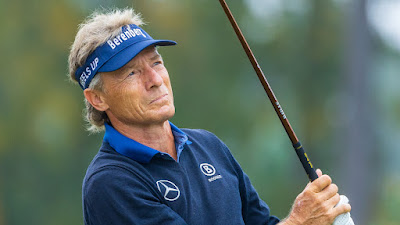
What Can New Golfers Learn From Watching Senior Tour Golf? (image: NY Times)
 
This past week, the 2021 Senior Open was played at Sunningdale Old Course in England. I was lucky enough to catch the last round on TV, even through a hectic Olympics schedule. I don't typically watch Senior tour events, but I am glad I watched this one. It was a great display of golf, as Welshman Stephen Dodd, fought off attacks from the likes of golfing legends Miguel Angel Jimenez, Darren Clarke and Bernhard Langer, to win his first major. Even sweeter perhaps is that Dodd is now eligible for PGA Tour Champions events.
 

For those that do not know, the PGA Tour Champions and its European counterpart, the European Senior Tour, are senior professional tours featuring older golfers. Typically these are players that have found success on either the PGA Tour or European Tour, but want to continue their careers in a less-stressed fashion. There are fewer events on senior tours and the ones played are only three rounds in length, except for majors. 
 

As I watched the final round of the Senior Open, I started thinking a bit more about senior golf and the players in general. I realized that average golfers, especially those new to the game, can learn a great deal about golf by watching senior tour events, even more so than regular PGA Tour events, in my opinion. 
 
 
So what exactly do I think can be learned? Well, I think it can be boiled down to two things: how to approach the game mentally and learning through experience
 
 
1) How to approach the game mentally
Let's face it, most of us golfers do not have aspirations to play professional golf. We play because we enjoy the game and enjoy playing it with others. Now that isn't to say that we don't want to get better; we all do. We all want to hit that perfect iron shot or sink that clutch putt. One way players can improve their game is to examine how they approach it from a mental aspect. 


Here is where watching senior golf comes into play. From the events that I've seen, there is a more relaxed and calm atmosphere that seems to be present at these events. We see senior players having a good time while playing their rounds, talking to their playing partners, the fans, etc. It just feels more relaxed than when you compare it to a normal PGA Tour event. And it's for good reason. To be fair, most of the senior players have already had successful careers and may not necessarily have the same worries as a standard PGA tour player, such as trying to make a name for themselves or breaking through to win, etc.


This is the correct mindset us players should have towards the game, in my opinion. We shouldn't beat ourselves up over a bad shot, or let negative thoughts about a previous shot influence the next. I think any golfer, but new golfers in particular, can look to these senior players as an example of how to implement this correct mindset, in a tried and tested manner.


2) Learning through experience
The motto of the PGA Tour Champions is "Where Legends Play". This pretty much sums up the golfers that play on the senior tours. We're seeing experienced veterans, giants of the game, playing these events, outright legends in some cases. These are golfers who have been a part of professional golf for a long time and know how to play the game the right way. It's analogous to a master artisan, who has perfected their craft over time.

And who better to learn from than the masters themselves. What average players can learn from these veterans are things like shot-selection, game-plans for hole shapes/styles, how to recover when you find trouble, and overall golfing knowledge. Sure, the players are older, their swings are more restricted and they don't bomb it like the regular tour pros. But the vast wealth of knowledge that they possess is invaluable to learn from. Imagine being able to pick the mind of some of golf's greatest players. This is a pipe dream for most of us, but the closest we can get right now is watching senior golf in action. 

***

Bernhard Langer is a perfect example of someone who newer golfers can learn from; the poster boy for senior tour golf, hands down. I love watching Langer golf, because to me at least, he appears to be having a genuinely good time while playing, regardless of if he's playing well or not. He's no stranger to winning, having won 42 times on the European Tour, twice at the Masters and 42 times on the PGA Tour Champions. And he brings all that experience to the table every time he plays. It really is something special and Langer is just one of dozens of senior players with similar pedigree. 


If you're still not convinced at what you're getting when you watch a senior tour event and the influence it can have on you, give it a try. You may be surprised at what you see.


-Nick

Toronto Golf Reviews


What Can New Golfers Learn From Watching Senior Tour Golf? (image: NY Times)

Friday, August 14, 2020

How COVID-19 Has Grown the Game of Golf


It goes without saying that we are currently living in uncertain times. It seems that everywhere you look, every industry or facet of life, has been affected by the COVID-19 pandemic, golf being no exception. 

To say the golf industry has been on a rollercoaster ride for the past year is an understatement. But from what seemed like the darkest depths of the industry and in the unlikeliest of situations, golf appears to have emerged stronger than ever. In this article, I explore the reasons why I think the COVID-19 pandemic has ultimately grown the game of golf, at least here in Canada.


To accurately analyze this perspective, let's go back to the beginning of this ride, about a year ago. I had written an article outlining a concern I had for the golf industry; in particular, reasons why I thought more people weren't golfing and what we could do to fix it. It was an article born out of confusion I had on my part, or perhaps necessity. At the time, some considered golf a fading local industry. Naturally I was skeptical, but as I watched course after course close down and sold for land, city officials lobby for the removal of municipal courses based on viability and so on, it was difficult to ignore.

Fast forward to March of this year. As many of us golfers and courses were preparing for the upcoming season, the entire world was shaken by the COVID-19 pandemic. At first, I thought it would have a minimal effect on the industry, keep in mind the Ontario golf season usually kicks off in mid-April. I thought surely it would pass by then. But, as the delays and closures were extended, things began to look grim. Like in many other industries, we had no idea what impact closures of this length would have on the already "fading" golf industry. 


So, in these dark times, how did the consequences of the COVID-19 pandemic, in my opinion, ultimately lead to positive growth in golf? Let's examine this in detail.


I'll look at it from the perspective of Ontario, as that's the only perspective I can speak from. Outbreaks of COVID-19 resulted in the province going into a state of lockdown at the end of March, with non-essential services and businesses forced to close down or, in the case of golf courses, delay their opening. This resulted in a large portion of the population having to work from home or stay home all together. At the beginning of May, it was announced that golf courses could open up for business, to the joy of many golfers but concern to others. I had mixed feelings about this, mainly what the ramifications would be if outbreaks began occurring at courses.

But it was here, during the most uncertain of times, where golf began to grow. On one hand you have people suddenly having more time to themselves, but unable to do the things they want with that time, as a result of the lockdown. On the other hand, you have golf courses being one of the first things to open up. Add these together and you have the perfect situation for growth and a means for introducing new people to the game. In my "Why Don't More People Golf?" article, I noted that time was a major issue as to why more people weren't golfing. My solution was to promote the 9-hole round. A different approach was inadvertently taken as a result of COVID-19; people were given more time.

Perhaps more importantly was the psychological side of things. Adults and children wanted to get out. When you live in a small, crammed city apartment, where you've spent the last month or so, the vast openness of a golf course, that feeling of being immersed in nature, amongst the trees, seems very appealing. If fact, it was reported by TSN's Bob Weeks recently that rounds at the City of Toronto's municipal courses are up by 5,000 over last year.


Credit for this growth must also be given to the courses themselves. While golf is a relatively safe sport compared to others, in terms of contact and distancing (My slices have been social distancing me from my playing partners for years!), many courses have implemented additional measures to reduce risks, such as disinfecting carts, touchless ball retrieval systems, patio-only dining, etc. Had these measures not been in place and outbreaks began occurring at courses, the golf industry would be in serious, most likely irreparable, trouble. 

Golf courses have also cut down on the number of tee times they offer per day, in an attempt to lessen the amount of people on the course at any given time. In my experience so far, this appears to have the added effect of reducing the time it takes to finish a round. So now not only do people have more time for golf, the act of golfing could take less time. 


For years, golf has struggled to get people to try it out, to get them over that initial hurdle, for various reasons. COVID-19 has inadvertently set off a sequence of events that has ultimately led to people having more time and a desire to get out, with golf being available to meet that desire. And as I noted prior, it's a very addicting game, once you're in and you like it, it's difficult to shake off. 


We've spoken thus far about the positive impacts of COVID-19 on golf, but there are no doubt unavoidable consequences. In particular, the off-course social aspect of the game has been completely minimized,  as courses attempt to reduce contact between players and staff. The entire act of checking in before a round seems robotic, assembly line-like. To many golfers this is a concern or possible deterrent from the game. But we should all recognize that this is for the better and necessary, at the moment. 


Something must be said as well for how COVID-19 has affected professional golf. Like many other sports, professional tours began to cancel events once the pandemic began. Their return, however, was earlier compared to most other major sports (for example, the PGA Tour returned with the Charles Schwab Challenge on June 8th). With no other professional sports to fill the TV time slots during this time, golf tournaments began to receive more coverage, hence more exposure to kids and adults who may not have otherwise seen a tournament before (although online-only streaming for some tournaments has taken place).

When the fan-less tournaments did return, they were different; there's no other way of putting it. From what I've seen, it looks like we're seeing more laid-back versions of golfers and tournaments, but I don't necessarily think this is a bad thing. We're seeing a different but more personal side of golfers. The golfers appear to be relaxed and making the most of the situation, by interacting with each other, reporters and the camera more often. I personally think this is a form of the professional golfer that is more relatable to. Could this encourage more people to pursue the game, either locally or professionally? It's hard to say but it doesn't seem out of the question.

But fans are missed by the pros, as many have said, and can you blame them? Imagine walking down the 18th hole on a Sunday, just a putt away from winning your first tournament. That atmosphere cannot be recreated without fans, especially for events such as the Ryder Cup, which thrive on fan energy and presence.


I would like to end off with a few messages. This article isn't meant to be a "COVID-19 was a good thing" type deal, because it isn't, and it should not be looked at that way. Many people have died from this virus, loved ones lost in the worst of circumstances and conditions. This article is simply an attempt to explain what has been happening in the golf industry here in Canada. It's something I've found rather interesting and the point of this article was to piece it all together.

While the article may appear to be written from the perspective of hindsight, this is still an ongoing situation, both in terms of golf growth and the virus itself. We are currently at a pivotal point in these series of events. We must all do our part to prevent the spread of the virus. As I mentioned above, it is very easy for me to envision a scenario where outbreaks begin to occur at courses, with drastic consequences. We cannot let our guard down. It would be irresponsible of me to write this article and not encourage each and every one of you to follow course and government rules concerning the virus. Golf Canada has a webpage dedicated to this.


What's more important than the state of the golf industry however is the lives of each golfer. If we all play our cards right though, we will emerge from the pandemic healthy, with a flourishing golf industry to return to. 


Stay safe and remember to follow the rules, 


-Nick

Toronto Golf Reviews


I've given you my perspective of the issue, but what's yours? Leave a comment below with your thoughts and lets start a dialogue.


COVID-19's effect on the game of golf is ultimately dictated by our discretion towards the virus (Photo: PEI Golf Association)

Tuesday, September 10, 2019

Why Don't More People Golf?

 
 Golf is a funny sport.

It's funny in the sense that it's not like any other sport really. On one hand, we live currently in the era of eight-figure tournament purses and increasing stardom on the professional level. On the other hand, many critics of the game will tell you that golf is a dying sport on the local level.

I think it's hard to say at this moment if the game is trending upwards or downwards. What we can say for sure is that, at least in Canada, golf is certainly not in the same league as hockey, baseball or basketball in terms of popularity. Golf should be more popular though; there are many factors going for it: the aforementioned lucrative yet attractive professional level of the game, the amount of golf courses that exist (especially in the GTA), its close relationship with the professional world, just to name a few. 

But why isn't this the case? Why don't more people golf? To answer this question, I've compiled a list of reasons as to why this may be, as well as proposed solutions. Let's take a look at this in more detail.


Time Constraints
One of the most common complaints I hear about golf is that it takes too long. On average, a round of 18 holes takes a foursome of mid-handicappers like myself about four and a half hours, not including a break or grabbing something to eat between nines. It is a commitment no doubt; a day off work for most people playing during the week or a good portion of people's prized weekend.

As people today continue to get busier and busier in their daily lives, asking them to commit over four hours for a single activity is tough. I personally have been finding it harder and harder to plan a foursome with friends and I'm sure most golfers have experienced the same thing in one form or another. On a side note, we can of course talk about why a round of golf takes this long, but I think I'll save that discussion for another post.


Cost
I conducted a Twitter poll recently, asking our followers the same question we are asking ourselves here. The overwhelming response was that more people aren't golfing because they can't afford it.

Historically, golf has held the stigma of being perceived as a "rich man's sport", only played by those who need not worry about money. Today, this stigma is mostly a thing of the past, however there are some parts of the golf industry that are still expensive.

Among all sports, golf equipment is without a doubt at or near the top of the list in terms of price. New golf equipment is expensive. Pay a visit to your local golf store and you'll find the latest drivers costing upwards of $600, iron sets in excess of $1000, and so on and so forth. Although that high-priced equipment isn't, for the most part, tailored to new golfers, it can be a bit intimidating. For reference, an entry level set of golf clubs will cost you about $500. But as us golfers know, golf equipment is notorious for its depreciation value. This season's newest driver will easily drop $200 before the start of the next season, once the next "newest" driver is released. It's simply not with it, from a cost perspective, to buy the latest equipment.

The costs don't stop there, as green fees and memberships add to the overall bill (although they have been decreasing over the years, for some courses). This is another feature that is unique to golf; you are required to pay simply to play the sport, no matter what level. Don't get me wrong, these are necessary fees as they go towards the preparation and maintenance of the course, but nevertheless it still adds to the bill.


Difficulty
Ask a group of people to shoot a hockey puck, kick a soccer ball or shoot a basketball and most of them will understand how to do it. Ask them to swing a golf club and strike a golf ball, however, and most of them will not succeed. The mechanics of the golf swing are inherently more difficult than most sports. Even most golfers don't have a full understanding of it. It's what attracts us to the game though, this inherent difficulty. It gives us something to strive for. What's the one thing a golfer wants to do after they've played a great round, one where everything just seemed to click? Play another.

But this difficulty should not intimidate those who are new to the game. Rick Young (@YoungerGolf) of SCOREGolf brought up a very good point when I asked him about this topic on Twitter. He said, on the topic of difficulty, that "the game is only as hard as you allow it to be." And I think Rick is absolutely right about this. Golf is a mental game, a battle between you and your mind. You push yourself as hard as you want, you set your own goals. There is absolutely no need to become a scratch golfer to enjoy the game.


"The game is only as hard as you allow it to be."

-Rick Young on the difficulty of golf


How To Get More People Playing Golf
I've gone into much detail about why I think more people aren't golfing. Now let's look at some of the ways I think we can fix that.

Concerning time constraints, I think the key to overcoming this barrier is to promote the 9-hole round. Nine holes typically take about a couple of hours, which now puts it in a "reasonable" time frame for most people. In addition to this, golf courses need to have a great twilight special. In my experience, twilight rounds always have a much more relaxed feel to them; excellent for a new golfer. Plus the after-work/after-school time slot is much more accessible to the average person.

Concerning equipment costs, golf equipment manufacturers as well as retailers should be promoting more entry-level, less expensive equipment to attract new golfers. This is the best case scenario, but I understand that it isn't the most feasible option. In lieu of this, the new golfer can take things into their own hands and there is much help for this. Many deals on golf equipment are available, whether its in the form of used clubs or clubs on clearance. And new golfers please, speaking from experience here, do not feel the need to have the latest equipment! In my golf bag currently, I have a Ping G15 Fairway Wood and a 56 degree Paradise sand wedge, both outdated and cheap even when I bought them a few years ago. But they are hands down my favourite clubs in my bag; clubs that I have confidence with and clubs that are reliable. What's important to remember here is that buying golf equipment is a slippery slope that can get out of hand quickly. And for those who are concerned about high green fees, I encourage everyone to sign up for as many golf course newsletters and e-clubs as possible. Many times courses offer unique deals that may appeal to you. In essence, let the deals come to you.

Concerning difficulty, for those who are completely new to the game, a few introductions lessons wouldn't hurt, just to learn the basics. In fact, many courses in the GTA (and most likely all over Canada) have great lesson programs and are staffed by PGA of Canada members. On a more personal level, going out to your local driving range for a few hours can do wonders. Golfers need to figure out what works for them; each golf swing is different from the next. The driving range is where a golfer can test things out, without feeling the pressures that course-play brings.

One thing that I haven't talked about yet are the health benefits of golf. This was something that was also brought up by Rick Young and frankly, something that I was not fully aware of. According to Rick, walking 18 holes while carrying your clubs will burn about 1800-2000 calories, riding for 18 holes about 1200-1300 calories; impressive numbers considering the fact that it is "low impact" exercise. There's also the social side of the game. Meeting new people, being outside, spending time with friends; some of my best memories with my friends have been on the course. We need to be promoting this aspect of the sport.

I'll end on this statement. If you are reading this post and you are new to golf or have some interest in it but have never played, here's my advice to you. Golf is the only true individual sport in my opinion. It's one of the only sports that you can just go out and play; just you, your clubs, a ball and a course. I believe also that it is one of the most satisfying sports, on both a physical and mental level. So try it out, go to your local driving range, rent some clubs and give it a shot (no pun intended). You may like the game or you may not, but what I can guarantee you is that it'll be like nothing you've ever tried before.


-Nick
Toronto Golf Reviews


The discussion doesn't end here. What are your thoughts on why more people don't golf? Do you agree or disagree with anything I wrote? Let us know in the comments below.  


With professional golf becoming more and more lucrative, why aren't more people golfing at the local level?
(Butch Dill/USA TODAY Sports)